All articlesCosts & Deals

    Private Jet Rental in 2026: What It Actually Costs and How to Book Without Overpaying

    What a private jet rental really costs in 2026, how charter, jet cards and fractional compare, the safety checks to run before you sign, and how to fly private on a smaller budget.

    By P3 Jets Charter Advisory Desk•Last updated: November 2026• 10 min read

    Last reviewed November 8, 2026 by a P3 Jets charter advisor. Pricing ranges come from our own quote and booking records. See our editorial standards and AI disclosure.

    Ready to plan your next trip?

    Send us your itinerary and an advisor will respond with a quote and aircraft options.

    Speak to an Advisor
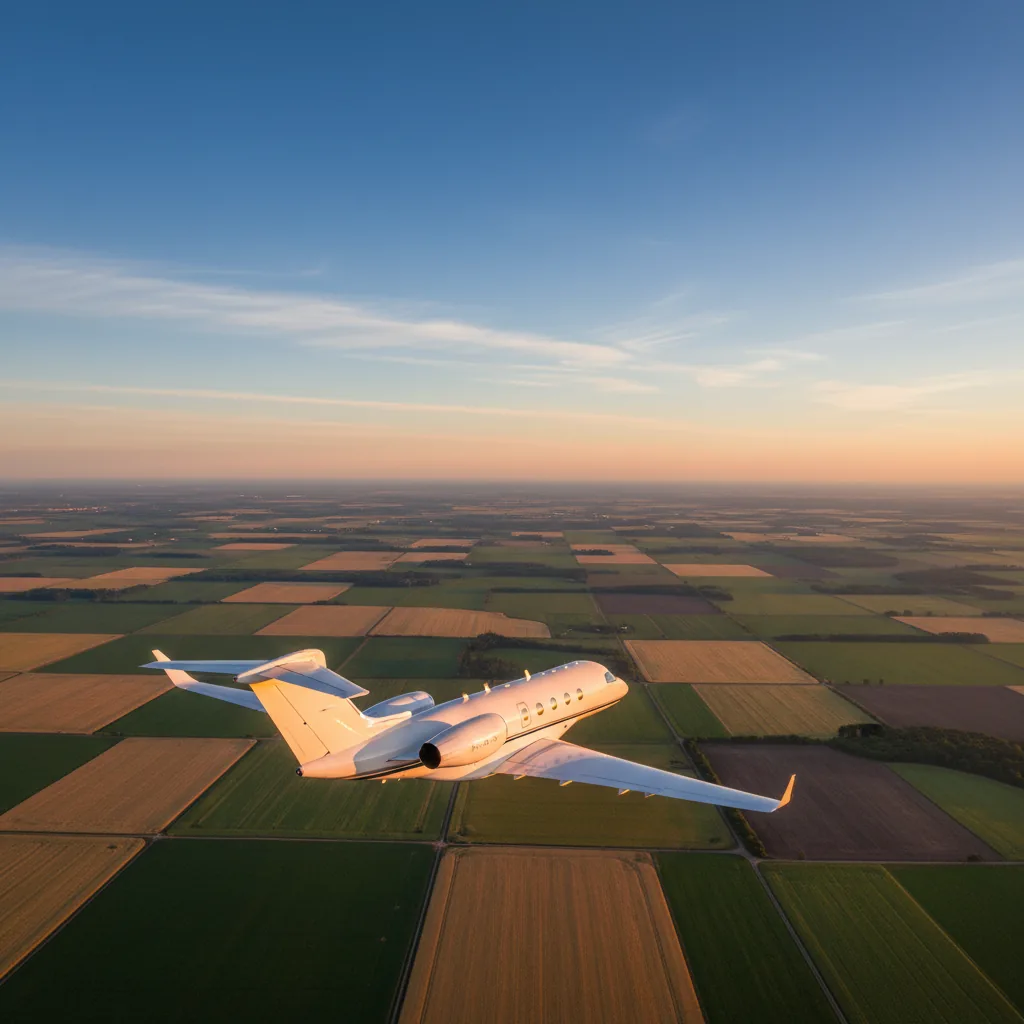
    Private Jet Rental in 2026: What It Actually Costs and How to Book Without Overpaying - P3 Jets private jet charter guide

    Key takeaways

    • A private jet rental typically costs about $5,000 to $17,000 per flight hour in 2026, depending on aircraft category, route distance and seasonal demand, with the longest-range jets reaching about $19,000.
    • FBO handling, overnight crew, repositioning, de-icing and the 7.5 percent federal excise tax sit on top of the hourly rate, so always compare all-in trip cost.
    • On-demand charter is the most flexible way to rent a private jet: no membership, no deposit and no long-term commitment.
    • The best private jet rental company names the operator flying your trip, verifies ARGUS or Wyvern safety ratings and gives you an itemized quote before you commit.
    • A two-hour light jet trip typically lands around $11,000 to $15,000 with tax and typical fees, while a midsize jet for the same time runs about $14,000 to $18,500 before any repositioning.

    Most people who search for a private jet rental aren't billionaires. They're professionals and families who've done the math on commercial delays, missed connections and lost workdays, and concluded that flying private might make sense for certain trips. The industry hasn't made it easy for them to learn what they'll actually pay, or whom to trust with a five-figure booking.

    This guide strips the ambiguity out of private jet rental costs, compares the three main access models and walks through the safety checks that separate a solid charter from a regrettable one. Here's the paradox: the more transparent the pricing, the more confident the buyer, and the more likely they are to fly again. Yet much of the industry still treats pricing like a trade secret.

    How Much Does a Private Jet Rental Cost?

    Most private jet rentals cost roughly $5,000 to $17,000 per flight hour in 2026, from light jets up to large-cabin aircraft, with ultra-long-range jets reaching about $19,000. Aircraft size sets the base rate. Route distance, repositioning, season and airport fees then move the final number, so the hourly rate alone never tells you the full trip cost.

    A quick walkthrough of what a private jet rental costs and how to book it.
    Aircraft categoryTypical seatsHourly rate rangeBest for
    Turboprop6 to 8$3,900 to $5,200Short regional hops under about 500 miles
    Light jet5 to 7$4,800 to $6,500Trips up to about 3 hours
    Midsize jet7 to 9$6,200 to $8,000Regional and coast-to-Florida routes
    Super midsize jet8 to 10$7,500 to $9,800Nonstop transcontinental trips
    Heavy jet10 to 16$9,500 to $13,500Large groups and long flights
    Ultra-long-range jet12 to 16$13,000 to $19,000Intercontinental nonstop flights

    Those ranges are base hourly rates before tax and fees. Here is what common trip lengths typically cost once the 7.5 percent federal excise tax and normal handling fees are added. Repositioning, overnight crew and peak-day demand can push a real quote higher, which is why an itemized quote beats any estimate.

    TripBase flight costEstimated with tax and typical feesWhat can raise it
    Turboprop, 1.5 hours$5,850 to $7,800About $6,800 to $9,000Daily minimums, repositioning
    Light jet, 2 hours$9,600 to $13,000About $11,000 to $15,000Repositioning, peak days
    Midsize jet, 2 hours$12,400 to $16,000About $14,000 to $18,500Repositioning, overnight crew
    Super midsize jet, 3 hours$22,500 to $29,400About $25,000 to $33,000Peak season, de-icing
    Heavy jet, 4 hours$38,000 to $54,000About $42,000 to $60,000Overnight crew, catering

    The tax figure comes from the IRS rules on air transportation excise tax. For model-by-model detail, see the private jet cost per hour guide. P3 Jets provides itemized, all-in quotes so you see repositioning, crew fees and taxes before you commit, never after.

    Charter vs. Jet Card vs. Fractional Ownership

    On-demand charter is the most flexible private jet rental model because it requires no membership, no deposit and no long-term commitment. You request a quote, approve the price and fly. Jet cards and fractional ownership trade some of that flexibility for fixed rates or guaranteed access, and they only pay off once you fly enough hours each year.

    FeatureOn-demand charterJet cardFractional ownership
    Upfront costNonePrepaid deposit, often six figuresShare purchase, often high six to seven figures
    Hourly rateMarket rate, varies by tripFixed by category at purchaseLower occupied rate plus monthly fee
    CommitmentPer tripUsually 25 to 50 hoursMulti-year contract with buyback
    AvailabilityDepends on the marketGuaranteed within a stated notice windowGuaranteed annual hours
    Best forUnder about 25 hours a yearAbout 25 to 100 hours a yearAbout 100 or more hours a year

    Charter works like a taxi: pay per ride, no strings. Jet cards function like a prepaid plan, locking a fixed hourly rate that shields you from peak-day swings. Fractional ownership is closer to a timeshare, buying a share of a specific aircraft with guaranteed annual access. The upfront capital is substantial, monthly fees run whether you fly or not, and exit terms are set by contract.

    Frankly, the honest move for most first-time renters is to start with on-demand charter, fly three to five trips, track your hours and preferences, then check whether a card would have saved money. Real data beats a sales pitch. Our jet card comparison guide and charter vs. jet card vs. fractional guide run the numbers, and the P3 Jet Card terms are published openly.

    How to Book a Private Jet Rental Safely

    The best private jet rental company names the operator flying your trip, works with carriers holding current ARGUS or Wyvern safety ratings, gives you transparent all-in pricing before you commit and assigns a dedicated advisor rather than a call center. Safety in private aviation isn't a tagline. It's a set of credentials you can verify before you sign anything.
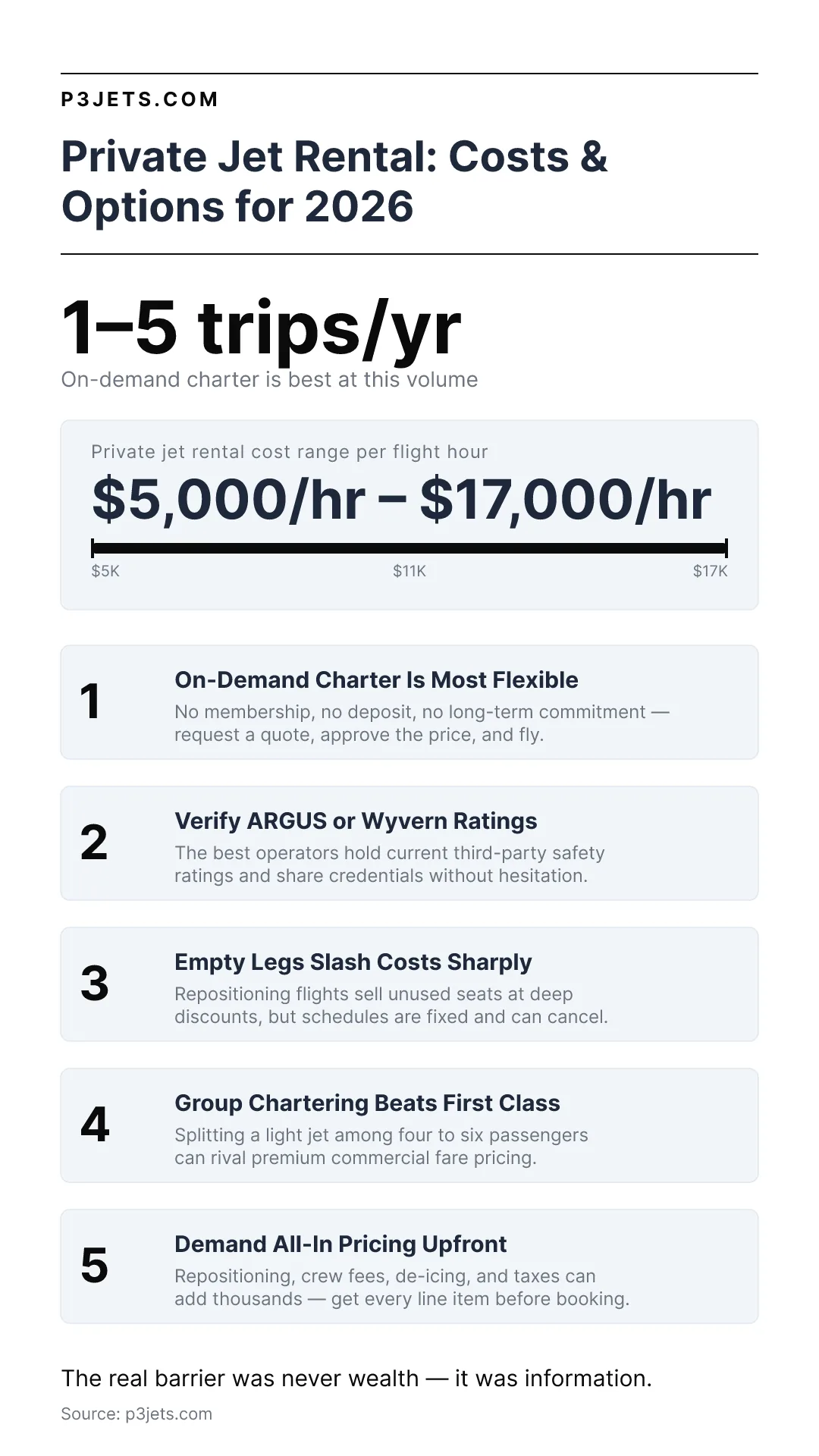
    Infographic: private jet rental costs and options for 2026. On-demand charter is best at 1 to 5 trips a year; about $5,000 to $17,000 per flight hour; verify ARGUS or Wyvern ratings, use empty legs, split with a group, demand all-in pricing
    Five ways to rent a private jet without overpaying.

    Fast quotes are convenient, but speed doesn't make an operator safer. Some booking platforms put price ahead of pilot experience and maintenance history. Run this checklist before you sign:

    • **Confirm the operating carrier.** The aircraft should fly under an FAA Part 135 certificate, and the operator should be named on your quote.
    • **Check the safety rating.** ARGUS Gold, Gold+ or Platinum, or a Wyvern Wingman audit, signals a review well beyond the FAA baseline.
    • **Ask about maintenance.** Ask when the aircraft's last major inspection was completed and whether it follows the manufacturer's program.
    • **Review pilot experience.** Ask for total and type-specific flight hours for the crew assigned to your trip.
    • **Request the insurance certificate.** Liability limits should match the aircraft size and passenger count.

    A good broker handles all of this on your behalf and shows you the results. The uncomfortable truth about private aviation safety is that most operators are excellent, but the ones that aren't can be hard to spot without the right questions. Our first-time charter guide, operator vetting checklist and safety standards page go further.

    Ways to Fly Private on a Smaller Budget

    Private jet rental doesn't require a six-figure budget for every trip. Travelers who can flex on timing, airports or cabin size can bring private flying much closer to premium commercial fares. Empty legs, group charters, midweek departures and right-sizing the aircraft are the four levers that matter most, and none of them require a membership.

    Empty legs are one-way repositioning flights that would otherwise fly without passengers, typically priced 30 to 70 percent below standard charter. The catch is flexibility: schedules are fixed, routes are limited, and the flight can be cancelled if the original trip changes. For adaptable travelers, the savings are real. You can browse current empty leg availability or read our empty leg guide.

    Group chartering is the lever most first-time renters overlook. Splitting a light jet among four to six passengers can bring the per-person cost close to last-minute first class on certain routes, as our charter vs. first class comparison shows. You still book the whole aircraft; the group simply shares the bill.

    • **Book midweek.** Demand spikes on Fridays, Sundays and Mondays, and around holidays listed in our peak day planning guide.
    • **Right-size the aircraft.** A light jet costs far less than a midsize if your group and bags fit comfortably.
    • **Consider secondary airports.** Smaller airports often mean lower fees and an aircraft already nearby.

    Your Next Move

    Private aviation isn't reserved for billionaires, and it never was. The real barrier was always information. Before your first private jet rental, know your route, passenger count, baggage and budget ceiling including fees, then talk to an advisor who can match those inputs to real aircraft availability and show you every line item.

    Request an itemized quote or call (844) 767-8370. We'll name the operator, the aircraft and every fee before you commit.

    Sources and methodology

    Pricing ranges reflect P3 Jets quote and booking records over a rolling twelve months. Regulatory and travel requirements are drawn from the primary sources below.

    Frequently asked questions

    How much does it cost to rent a private jet for a one-way domestic flight?

    A one-way domestic private jet rental usually costs between about $7,000 and $60,000 or more, depending on aircraft size and flight time. A two-hour light jet trip typically lands around $11,000 to $15,000 with tax and typical fees, while a four-hour heavy jet trip can reach $42,000 to $60,000. One-way trips can also carry repositioning costs if the aircraft has to fly empty to your departure airport or back to base. The total includes fuel, landing and handling fees, crew expenses and the 7.5 percent federal excise tax, so always ask for an all-in quote rather than relying on hourly estimates.

    What are the hidden fees when renting a private jet?

    The charges that most often surprise first-time renters are repositioning, overnight crew expenses, FBO handling and landing fees, de-icing in winter, catering beyond basic snacks, and the 7.5 percent federal excise tax plus segment fees on domestic trips. Repositioning alone can add thousands of dollars if the aircraft must fly empty to your departure airport. International trips can add customs, permits and handling fees. Peak-day surcharges around holidays can also raise the price. The best protection is simple: request an all-in estimate with every line item broken out before you book, and compare total trip cost rather than headline hourly rates.

    What is the difference between chartering, fractional ownership and jet cards?

    Chartering is pay-per-trip with no ownership and no upfront commitment, priced at the market rate for the aircraft you choose. Jet cards let you prepay a block of hours or a deposit at fixed hourly rates by category, giving price predictability and guaranteed availability within a stated notice window, without owning anything. Fractional ownership means buying a share of a specific aircraft, paying a monthly management fee and an hourly rate, with a guaranteed number of annual hours and a contract that usually runs several years. Charter suits most people flying under about 25 hours a year, cards fit roughly 25 to 100, and fractional fits more.

    Are jet card memberships worth it compared to on-demand charter?

    Jet cards are usually worth it once you fly roughly 25 to 100 hours a year on a fairly predictable schedule. At that volume, the locked hourly rate and guaranteed availability outweigh the flexibility of paying market rates trip by trip, especially if you travel on peak days. Below about 25 hours, the prepaid deposit is capital sitting idle, and on-demand charter almost always costs less overall. Read the fine print on peak-day surcharges, minimum flight times per leg and refund terms before buying. A useful test is to price a full year of your real trips as charter and compare that total with the card cost.

    How do empty leg flights work and are they really that discounted?

    Empty legs happen when an aircraft must reposition without passengers, for example after dropping off a one-way client. Operators sell those flights to recover some of the cost, typically 30 to 70 percent below standard charter. The savings are real, but the route, departure time and aircraft type are fixed by the original booking, and the flight can be cancelled or moved if that primary trip changes. You book the whole aircraft, not individual seats. Empty legs are a great fit for travelers with flexible dates who can act quickly, and a poor fit for anyone who must arrive at a specific time.

    Is chartering cheaper than first class if you split it with a group?

    It can be. Splitting a light jet among four to six passengers can bring the per-person cost close to last-minute first class fares on certain short and medium routes, especially when there is no convenient nonstop service. You still pay for the whole aircraft, so the math only works when the group fills most of the seats. On longer routes that need larger aircraft, the economics become less favorable, although the time saved on security lines, connections and terminal waits still has real value. Compare the total charter quote divided by passengers with real first class fares for everyone on the same dates.

    What safety certifications should I verify before booking a private jet rental?

    Start by confirming that the aircraft will fly under an FAA Part 135 certificate and that the operator is named on your quote. Then look for a current third-party safety rating such as ARGUS Gold, Gold+ or Platinum, or a Wyvern Wingman audit. These programs review maintenance records, pilot training and experience, insurance and operational procedures beyond the FAA minimum. Ask for the insurance certificate and the crew's flight hours on the aircraft type. If an operator or broker hesitates to share safety credentials, treat that as a clear signal to look elsewhere, because reputable firms provide them without hesitation.

    What are current private jet hourly rates by aircraft type?

    Approved 2026 market ranges, before tax and fees, are roughly $3,900 to $5,200 per hour for turboprops, $4,800 to $6,500 for light jets, $6,200 to $8,000 for midsize jets, $7,500 to $9,800 for super midsize jets, $9,500 to $13,500 for heavy jets and $13,000 to $19,000 for ultra-long-range jets. These rates move with fuel prices, seasonal demand and where aircraft are positioned. Daily minimums and repositioning can raise your effective hourly cost on short trips. A specific aircraft's quote will vary, so treat the ranges as a planning guide and request an itemized quote for your route.

    What is the minimum budget needed to fly private even once?

    For a short regional trip on a turboprop or light jet, plan on roughly $7,000 to $15,000 all-in for about one to two hours of flying, including tax and typical fees. Daily minimums mean even very short flights are often billed at one hour or more. Empty legs can bring that down substantially, typically 30 to 70 percent below standard charter, but availability is unpredictable and depends on timing. First-time flyers should budget toward the higher end unless they can flex on route and departure date. A P3 Jets advisor can show you the most cost-effective option for your specific trip before you commit.

    Why are private jet prices so much higher than commercial first class for the same route?

    With a private jet you pay for the entire aircraft, its crew, fuel, maintenance reserves and airport fees, rather than sharing those costs with more than a hundred other passengers. Commercial airlines spread their fixed operating costs across a full cabin, while a private charter spreads the same kinds of costs across a handful of travelers. That difference in cost structure, not luxury alone, explains most of the price gap. What you get in return is your own schedule, private terminals, no connections and far less time at the airport. For groups, splitting the aircraft narrows the gap considerably.

    Can middle-class travelers afford private jet travel occasionally?

    Yes, occasional private travel is within reach for many budget-conscious travelers who use the right strategies. Empty legs, typically 30 to 70 percent below standard charter, are the biggest lever. Splitting a whole aircraft with family or friends, flying midweek instead of Fridays and Sundays, and choosing a smaller aircraft or a secondary airport all help too. The key is flexibility: travelers who can adjust their dates and airports around aircraft availability unlock the largest savings. A milestone trip, a family reunion or a hard-to-reach destination is often where an occasional private flight makes the most sense.

    How do I find a private jet charter near me?

    Start with the general aviation airports closest to you, since smaller airports often have lower fees, shorter drives and faster boarding than major commercial hubs. Then ask a charter advisor to source aircraft already based near your departure airport, which reduces or removes repositioning costs. Online platforms can show availability across operators, but confirm who actually operates each aircraft and its safety rating before booking. Our private jet charter near me guide explains how to compare local options. Combining a nearby airport with a well-positioned aircraft is usually the fastest path to fair pricing in your area.

    Ready to plan your next trip?

    Send us your itinerary and an advisor will respond with a quote and aircraft options.

    Speak to an Advisor

    Request a Charter Quote

    Step 1 of 3

    Tell us about your trip - airports, dates, and passengers.

    Full aircraft charters only - we do not offer by-the-seat bookings.

    Jet charter typically starts between $4,000 and $10,000 per flight hour, depending on aircraft category.

    1
    ~30 min response Certified operators only No obligation
    5.0496 reviews

    Rated by clients on Google & other platforms

    Read