Key takeaways
- Chartering a private jet takes five steps: define the mission, get a line-item quote, verify the operator, sign and pay, then arrive 15 minutes before departure.
- In 2026, charter typically starts between $4,000 and $10,000 per flight hour depending on aircraft category.
- You are buying the whole aircraft, not a seat, so the price does not change when you add a passenger within the cabin's limits.
- Verify that the operator holds an FAA Part 135 certificate and current ARGUS, Wyvern or IS-BAO standing before you sign anything.
- Same-day charter is routine in major US metros, with two to four hours from confirmed booking to wheels up.
Your first charter is simpler than the industry makes it sound. Five steps, one afternoon of decisions, and you're done. In 2026 the whole process can run from first call to wheels up in a single day, and the part that takes longest is usually deciding which airport you want. Here's the playbook our advisors walk first-time clients through, and you can start yours on the charter page whenever you're ready.
How do you charter a private jet, step by step?
Define the mission, request a line-item quote, verify the operator, sign the charter agreement and pay, then show up 15 minutes before departure. That's the entire process. Most first trips involve one phone call and one email exchange, and the aircraft is confirmed to a specific tail number before you pay.
| Step | What you do | What we do | Typical timing |
|---|---|---|---|
| 1. Define the mission | Give route, date, passenger and bag count | Size the aircraft category | 5 minutes |
| 2. Quote | Review line items and aircraft options | Source live availability across operators | 30 minutes to 3 hours |
| 3. Verify | Ask for operator name, certificate, audit standing | Confirm Part 135 and ARGUS, Wyvern or IS-BAO | Same day |
| 4. Contract and pay | Sign the charter agreement, wire or card | Issue trip sheet and crew brief | 1 to 2 hours |
| 5. Fly | Arrive 15 minutes early at the FBO | Coordinate catering, ground, and crew | Departure day |
No security line. No boarding groups. You park, walk in, and the crew is waiting.
What information does a charter advisor need from you?
Six things: departure airport or city, destination, date and preferred departure time, passenger count, bag count and type, and any special requirements such as pets, a wheelchair, or skis. That's enough to quote accurately. Everything else, including catering and ground transport, can be settled after the aircraft is confirmed.
Bag count matters more than people expect. A light jet with six seats will not take six passengers plus six large suitcases plus golf clubs, and summer heat reduces payload further.
So tell your advisor the truth about the skis. It changes the airplane.
How do you pick the right aircraft?
Match aircraft category to distance and headcount, in that order. Light jets handle up to about 1,200 nautical miles with six passengers. Midsize adds range and a taller cabin. Super midsize flies nonstop coast to coast with a full cabin. Heavy jets cross oceans. Paying for more cabin than the mission needs is the most common first-timer mistake.
| Category | Passengers | Practical range | 2026 hourly rate | Best for |
|---|---|---|---|---|
| Turboprop | 6 to 8 | 600 to 900 nm | $3,900 to $5,200 | Short hops, small runways |
| Light jet | 6 to 7 | 1,100 to 1,500 nm | $4,800 to $6,500 | Most domestic first trips |
| Midsize jet | 7 to 8 | 1,800 to 2,300 nm | $6,200 to $8,000 | Longer routes, more bags |
| Super midsize | 8 to 9 | 2,800 to 3,400 nm | $7,500 to $9,800 | Nonstop transcontinental |
| Heavy jet | 10 to 14 | 3,600 to 4,500 nm | $9,500 to $13,500 | Transatlantic, flat beds |
Cabin photos and typical missions for each type are on the P3 Jets fleet page. If you want a fixed price on a specific aircraft, our instant book options show what's bookable right now.
What should you ask before you sign?
Ask five questions: who is the operator, does it hold a current FAA Part 135 certificate, what is its ARGUS or Wyvern standing, what is the tail number and year, and what is not included in this price. A broker who answers all five without hesitation is a broker worth using.
- Operator name and certificate number, which you can check against FAA records.
- Current third-party audit standing from ARGUS, Wyvern, or IS-BAO registration.
- Tail number, aircraft year, and seat configuration.
- Whether the quote includes repositioning, crew overnights, taxes and handling.
- Cancellation terms and what happens if the aircraft goes out of service.
Our vetting standard, and what we refuse to book, is written out on the safety page. Every operator we use is Part 135 certificated and ARGUS, Wyvern or IS-BAO vetted.
What happens on the day you fly?
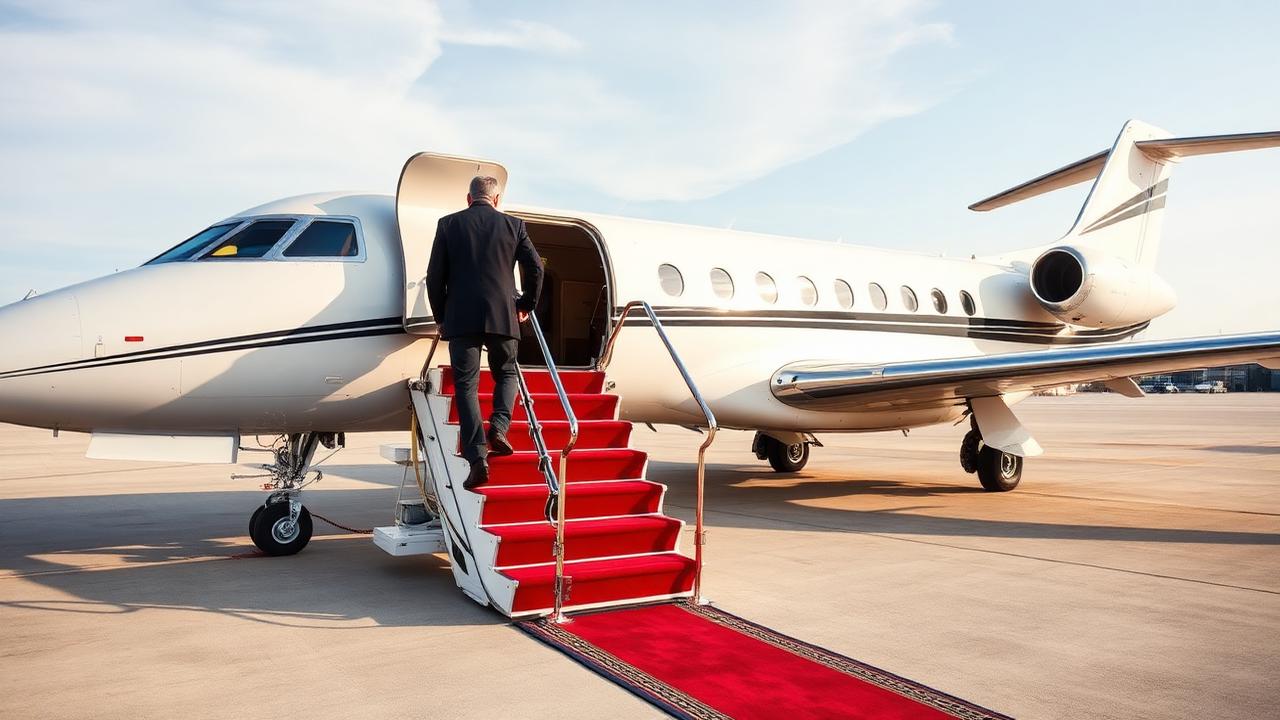
Arrive at the FBO 15 minutes before departure, park steps from the door, and give your name at the desk. There's no security screening for domestic charter, no baggage carousel, and no gate. The crew loads your bags, you walk to the aircraft, and you leave when you're ready rather than when a schedule says so.
For international departures, allow 30 to 45 minutes for customs paperwork. Bring passports for every passenger, including children.
Pets ride in the cabin on most operators, no crate required. Details are in our pet friendly charter guide.
What does a first charter actually cost?
A first domestic trip usually lands between $14,000 and $25,000 all in. That covers occupied flight time, repositioning, crew, landing and handling fees, and the 7.5 percent federal excise tax on domestic air transportation (IRS). Round trips often price better per leg than one ways, because the return uses ferry time you'd otherwise pay for anyway.
| Sample first trip | Aircraft | Passengers | All-in cost | Notes |
|---|---|---|---|---|
| Nashville to Palm Beach, 3 nights | Light jet | 6 | $14,000 to $19,000 | Crew overnights included |
| Teterboro to Miami, one way | Midsize | 7 | $16,500 to $22,000 | Return ferry priced in |
| Scottsdale to Aspen, weekend | Light jet | 5 | $17,000 to $24,000 | Runway and altitude limits apply |
| New York to Chicago, day trip | Light jet | 6 | $13,500 to $18,000 | Same-day return, no overnight |
| Fort Lauderdale to Nassau, day trip | Light jet | 6 | $12,000 to $16,500 | Customs and handling at cost |
Full pricing mechanics, including every fee line, sit in our charter cost guide.
Common first-timer mistakes
Most first-timer mistakes cost money rather than causing real problems, and every one of them is avoidable with a single honest conversation before the quote is issued. The pattern is consistent: people buy too much cabin, pick the airport they already know, and underestimate their own luggage.
- Booking a bigger cabin than the trip needs, which adds thousands per leg.
- Choosing the primary airport out of habit when a secondary field is closer and cheaper.
- Underestimating bags, which forces a category change on the day.
- Flying on a peak date without checking alternatives, where premiums run 15 to 40 percent.
- Comparing two quotes that aren't for the same aircraft, operator or fee structure.
To be fair, the last one is the industry's fault, not the client's. Line-item quotes exist to fix it.
Your next move
Pick your route and date, then ask for a line-item quote with the operator named. Compare it to the ranges above, ask the five verification questions, and you'll know within one conversation whether you're being treated well. Our advisors work around the clock and there's no membership fee for on-demand charter.
Call (844) 767-8370 or send the itinerary through the contact page, and we'll come back with aircraft options and the operator behind each one.
Sources and methodology
Pricing ranges reflect P3 Jets quote and booking records over a rolling twelve months. Regulatory and travel requirements are drawn from the primary sources below.